Friday, July 14, 2017

Only government could mess up the gas tank


Have you purchased a portable fuel tank for your garage or boat in recent years and wondered why they are, respectively, such pieces of garbage or so expensive?

You can’t help but be frustrated with what has happened to the once-simple gas can.

The modern no-spill units you use to fuel up your mower, chainsaw or ATV are anything but no-spill, as the clumsy spouts and necks lead to immeasurable amounts of wasted gas ending up on your power equipment and garage floor. You likely approach the same gas cans with trepidation because they look like bloated little powder kegs ready to explode on hot summer days because they are no longer manufactured with vents.   

Then there’s those portable tanks that come in a variety of sizes for your fishing boat. They could be purchased for under $30 prior to 2011. Now, they come in at $50 to $80.

The mark-ups don’t end there. Consider what became of the fuel tanks that you don’t make direct purchases of, such as those built into your equipment. The newer tanks and accompanying hoses and accessories have add $50 to the cost of push mowers and $100 to riding mowers over the past decade. Those same changes added $280 to the cost of an outboard engine and $360 to jet skis.

Don’t blame manufacturers for this.

Blame the government.

It all started with the California Air Resource Board and their purported efforts to save the environment which in the case of CARB is always done with truly-ridiculous regulations that micromanage the minutia of consumerism.

CARB somehow got it in their heads that fuel tanks and power equipment not only contribute to global warming when they’re open or running, but also when they are not. They believe that plastic tanks and hoses breathe incredible amounts of gas fumes to the air on a non-stop basis.

Cans might pass gas through a vented cap or a loose-fitting nozzle, so that’s what forced CARB to call for non-vented tanks that use self-closing spouts that require you to clumsily flick a lever to open them. Never mind that all those fumes still escape every time you open your gas can to fill it or put the spout back into the tank for safe transportation and storage.  

That rule was bad enough. Then CARB analyzed the gas molecules that might gradually work their way through the walls of the tanks or the bodies of the hose. CARB became adamant that those ultra-microscopic particles are killing the atmosphere so they required tanks be made with molded-in barriers or special materials to prevent permeation that was already negligible to begin with.

Sadly, the Environmental Protection Agency ate this up and decided to introduce similar standards at the federal level for gas cans, mowers and watercraft beginning in 2011 which accounts for the ridiculous and pricy changes you’ve encountered.

At my factory, we’ve lost business in a few waves because we didn’t have the technology necessary to meet these crazy regulations.

In 2010, we made the last of our portable fuel tanks for marine use. The production of those tanks kept 8 people busy for three-quarters of the year.  

That same year, fuel tank business for lawn mower manufacturers also tanked for us. We were making more than 60,000 mower tanks a year. Once the law went into effect, our customers’ tanks could be used only for aftermarket repairs of old mowers and production dropped to only 2% of what it was.

This week officially marks the end of an era for us at Confer Plastics as we will be making the very last of those aftermarket items. We had been making gas tanks since the early-1970s. Going forward, we’ll never make one again.  

We could have stayed in the gas can business, but it would have required a $4 million investment in a high-tech multi-layered machine necessary to make them. There are far better ways to invest such money and we certainly couldn’t have made such a purchase when those laws went into effect: We were in the throes of the recession, a truly scary time to do business.  

Sometimes, with laws like these, you just need to sit back and ponder how oppressive – and stupid – governments can be.

Leave it to them to ruin the simple, basic red gas can.

Think about that the next time you spill gasoline all over your shoes and hands.


 From the 17 July 2017 Greater Niagara Newspapers

Friday, July 7, 2017

EXPLORING THE NIAGARA FRONTIER: The Lytle Nature Preserve


The town of Lockport is blessed with some exceptional trails. The most recent addition to that embarrassment of riches – the Lytle Nature Preserve – is far and away the least utilized.  

Maybe it’s because it’s literally sandwiched between the town’s two most popular trails, the Erie Canal towpath (a.k.a “the Canalway Trail”) and the Lockport Nature Trail.

Or, maybe it’s because it’s relatively new and, in turn, relatively unknown.

Let’s hope this column takes the trail into the known and people enjoy a jaunt on this splendid trail.

The history of the Preserve 

The 111-acre site was donated to the town in 2008 by William and Celeste Lytle. William, a retired lumberman who owned Ridegwood Lumber, had purchased the property with the intent of raising beef cattle. After scrapping that idea, the Lytles had the vision of giving the land to the town under a conservation easement through the Western New York Land Conservancy, ensuring public access to grasslands, wetlands, and forest that offer prime habitat to a variety of plants and animals.

It took a few years to go from raw land to a navigable experience for the masses.

In 2010, the town applied for Niagara Greenway funding, which it received in 2011, to make the Preserve accessible to the neighboring Canalway trail. The reasoning was that the Canalway trail had no access to natural lands despite bordering dozens of miles of prime forest and field. This would connect it to nature.

The $95,000 in Greenway money was invested in the expansion of the Canalway’s parking lot (which doubles as the Lytle Preserve’s parking), the creation of paved access and the construction of a boardwalk. Development of those various niceties began in late-2012 and continued into 2016 through efforts of Lockport highway crews and volunteers.

Getting there

The Lytle Nature Preserve is easy to get to.


If you are coming from out of town, take Route 78 north through the city of Lockport. After going through Lockport’s Lowertown section, you will pass the very popular hamburger stand, Reid’s. After doing so, you will come upon a lighted intersection (with a Crosby’s gas station at the corner). Turn right onto Old Niagara Road.

Approximately a quarter mile down that road, take your second left, which will be North Canal Road. Then, within a couple hundred feet, turn right onto on access road that will take you to a nice parking lot next to the Canal. This twenty-car lot is where most Canalway Trail hikers start and where you will start your hike into the Preserve.

To do so, walk back down that access road you just drove in and cross the street where you will see some nice signage welcoming you to the Preserve.

From blacktop to boardwalk

The first quarter mile of your hike is a rather fancy way to start a nature hike.

Upon passing the welcome sign you will walk down a nicely blacktopped trail towards a small wetland of approximately 8 acres in size.


Once there, a perfectly-built boardwalk will keep you above that swampy ground. The wetland won’t give you a view of a pond or marsh. Instead, it is an almost jungle-like mass of reeds that you’ll be passing through.

That doesn’t mean you won’t have a chance to see some critters. On our recent hike, the reeds were full of red-winged blackbirds and swamp and song sparrows.

Grasslands

Once getting through the marsh, the path remains flat, is covered in nicely groomed gravel, and is well-maintained. Ken Horvath is a part-time town employee and volunteer who handles the brunt of the trail maintenance and he keeps the grass along this portion of the trail cut short so hikers and joggers need not worry about ticks.      


Upon entering this section, your views open up to impressive grasslands of perhaps 60 acres to 75 in size.

Native wild grasses had been planted in these grasslands (which are harvested in alternation by the way), affording an excellent home to field sparrows, northern harriers (marsh hawks), bluebirds and the always interesting bobolink, an uncommon member of the blackbird family that has a strange bubbling call and sports colors in reverse to that of most birds (a white back and a black breast).

When hiking, take a breather and listen for that wonderful bird and keep your eyes peeled for other creatures. We saw some evidence of coyotes in this section (the tell-tale hair-filled scat), so bring your binoculars. It wouldn’t be unexpected if winter hikers would see snowy owls here.

Into the woods       

The blacktop-boardwalk-stone section is perfect for walkers and joggers of any age and skill level. It is so flat and so well maintained that young parents can push a stroller through there with no problem. On our hike there we even saw some bicyclists from the Canalway trail using that stretch.

Those trail conditions change once you get into the woods. The lengthy loop of trails in the forest are soft and muddy in a few spots, but for the most part they are in very good shape. Those wet areas don’t allow the weed cutting machines to get in there often, so you will encounter some stretches in the lower areas with weeds that are shin to knee high. I was really surprised they weren’t trampled by visitors, which, I guess, speaks to the low number of hikers using the full length of the trail.

To me, the wooded portion is a normal hiking trail. But, those who prefer the civilized Canalway trail or were spoiled by the first couple of sections might be turned off by the wildness, especially if they are wearing shorts.

Press on. Horvath and others have done a bang-up job in putting a trail system in place in the forest.  

When you come to the entrance of the woods, don’t be put off by the “Posted. No Hunting” sign. You’re not entering private property. That’s just the town’s way of telling hunters they can’t pursue game in the Preserve.

The first portion of the wooded hike is in some lowlands of young-growth trees dominated by ashes (which might cause it to look like a skeletonized ghost town in a few years as the emerald ash borers take up residence). In this section we encountered song sparrows, yellow warblers, catbirds, cardinals, and orioles.

The second portion is on some slightly higher and much-drier terrain with some older trees with more diversity. Here, we saw deer, woodpeckers of various species, jays, and wood thrushes. Any place you can hear the flute-like calls of the thrush is a good place – they are a bird is serious decline all across the country.

As you get into the higher section, you will encounter very little undergrowth because of the sun-blocking canopy of the larger trees. So, to help you navigate the trail, there are orange ribbons tied to many trees.

This is a loop trail in the woods, so it will take you back to where you entered, unless you choose to exit in two other locations which will allow you to walk at the edge of the grasslands along the forest.         

I suggest you stay on the trails, especially when you exit the forest. Don’t explore the high grasses. When traipsing through grasslands it is too easy to step on songbird nests and ruin the environment. There are more than enough trails to keep you engaged with the wildlife.

In closing…

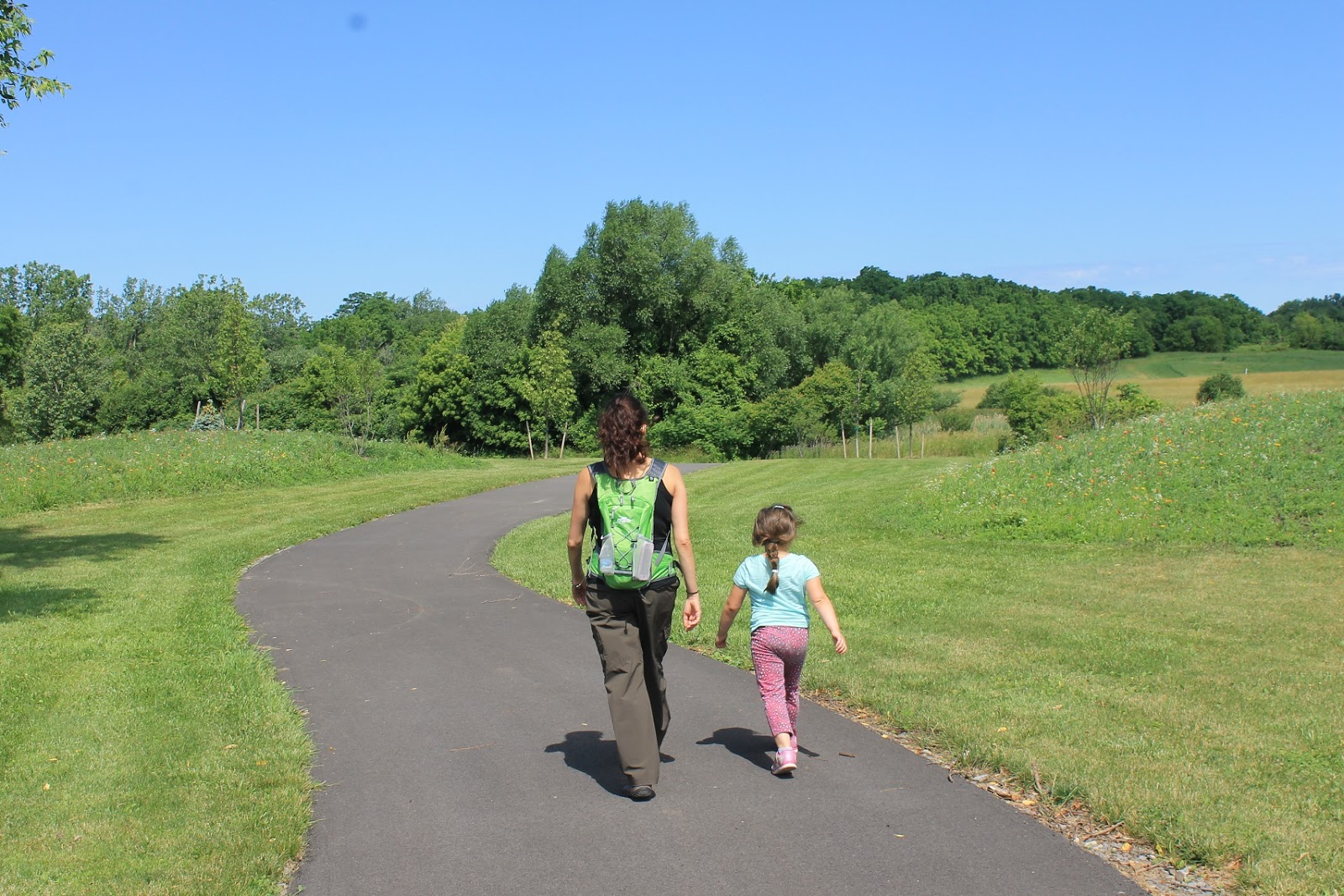
The entire hike across the Lytle Preserve from start to finish took us 50 minutes as we took it at a leisurely nature-watching pace with our 5 year-old daughter leading the way and my 3-month-old strapped to my chest – this was his first nature hike.

Visiting the Lytle Nature Preserve offers a nice respite from city life (the city of Lockport is literally just around the corner) and it gives canal walkers a change of pace from the sterile sameness of the canal towpath.

Let’s hope that more people start to use this wonderful trail and experience the wildness that the Lytles so wisely thought that the whole world deserved. This is a gem truly worth exploring on the Niagara Frontier.   


Thursday, July 6, 2017

Liability bill will lead to fewer doctors in New York


When vacationing in this beautiful state of ours, the presence (or lack) of medical care is something you probably pay attention to if you like any number of outdoors pursuits or you are the parent of a young child. You hope that you or your kid will never break an arm or twist an ankle, but you should be prepared in the event that does happen. 

If you’ve ever spent some time in the Adirondacks, you’ve likely noticed that doctors are incredibly rare.

There are so few doctors’ offices to pull from that back in 2014 ago the emergency room at Lake Placid’s Adirondack Medical Center went part-time, from 24 hours to 15. Mind you, Placid is a world-renowned tourism destination where injured skiers, hurt hikers and lost campers are not uncommon from Whiteface and the High Peaks.

If you are familiar with the popular Old Forge area in the Central Adirondacks, there are 3 medical offices there. There are no other doctors between OId Forge and places like Long Lake, Indian Lake, and Remsen. If a resident or visitor needs pediatric care, they have to drive more than an hour to Utica or Lowville. It’s that long of a painful ride to ERs in those same communities.

This is something that’s not unique to the North Country.

Similar shortages can be found throughout rural areas of Central New York and the Southern Tier.

In all, over 1,000 doctors are needed statewide just to keep up with demand.

That’s a staggering number, and one that’s growing as physicians age-out or close their practices and seek full-time employment at hospitals and urgent care centers.

There are a variety of factors that have led to this healthcare crisis. Above all, it’s tough for a doctor to earn a fair income in rural areas with fewer potential patients.

He or she needs to earn an income commensurate with the task (and pay off college debt), provide living wages for staff, invest in the latest in medical equipment and have a facility from which to operate. The potential of having a better business model and greater incomes in the suburbs or urban locales is what draws doctors to where the people (and, in turn, profits) are.

When you are talking about those special doctors who try really hard to stay in rural areas and make a living while tending to a higher calling, every cent truly matters.

When the economics are against them we can’t allow the government to make things worse.

And that’s exactly what the New York State legislature is doing.

Both houses passed a bill -- now awaiting Governor Cuomo’s signature or veto -- that would expand medical liability in the Empire State. This burden would dramatically increase the cost of the already-expensive medical malpractice insurance policies held by doctors and further expose them to the considerable monetary risks that are unique to their profession.

It’s not as if New York is lacking in malpractice payouts. The state’s laws and judicial system has New York doctors leading the nation in that regard.

Malpractice payments on a per capita (per resident) basis are over $36 here. New Jersey comes in second place at $29 while California, a land once believed to be as litigious and generous as New York, comes in at just under $6 per resident. Total malpractice payments in New York State in 2014 alone were nearly $714 million.

It’s not that we have a disproportionate number of bad doctors. It’s just that we have a system that penalizes like none other. State laws and the insurance woes they create hurt everyone, even the successful and most-skilled.

It’s no wonder WalletHub ranks us as the worst state in the union in which to be a doctor as based on 14 critical metrics.

It shouldn’t be that way.

As with any industry, we should make it attractive to do business here.

Expansion of malpractice liability won’t do that. It will only serve to drive doctors away, putting millions of New Yorkers and those who spend their tourism dollars here at risk if, God forbid, the worst ever happens and care is needed. 

Here’s hoping Governor Cuomo truly values the health and safety of upstate New Yorkers and vetoes this bill. 


From the 10 July 2017 Greater Niagara Newspapers
Thursday, June 22, 2017

EXPLORING THE NIAGARA FRONTIER: The wild strawberry

When hiking with the uninitiated in the Niagara Frontier’s June wilds I like to tell them that they haven’t lived until they’ve had a wild strawberry.


It certainly sounds like an absurd statement, doesn’t it? If you’ve had one strawberry, you’ve had them all.

Not so.

The wild strawberry is nothing like our cultivated specimens. The flavor is intense, at a magnitude of that of the farmed varieties. They are juicier and seem like an entirely different fruit. Incredible.

After having one you can see why the French began developing and cultivating strawberries in the 1700s. But, by doing so and making larger fruits, they lost much of the flavor (don’t get me wrong – farm raised strawberries are still pretty good).

“Larger fruits,” you ask?

Yes, wild strawberries are nothing like those developed by Man. They are tiny little things, from two-
tenths to four-tenths of an inch in length. You’d need to find dozens to make for a snack of any size. And, that’s not going to happen. You’d be lucky to find just one dozen strawberries in a patch. You can find these berries during the second half of June, in open areas of woodlands, pastures, and places that some naturalists consider “waste areas” (roadsides, ditches, rail beds, etc).

They like full sun or else the plant cannot produce fruit. Prior to the strawberry appearing, you will see a dainty white-petaled flower with a yellow center that will stay in bloom for most of the second half of May.

The leaves have saw-toothed edges and come in threes. The adage “leaves of three, let it be,” (which
many people apply to poison ivy) has to be ignored if not altered, or you could destroy these wonderful plants in your lawn or hedgerow.

There are plenty of tasty plants (like clovers and wood sorrels) and beautiful plants (trilliums, Jack in the Pulpit) with three leaves, so proceed with caution before spraying Round-up on these plants. If you do find the flowering strawberry plants in the spring, weed around them so you can enjoy the fruits.

While we’re talking about the strawberry, let’s end on a technical note. Maybe you’ll win Jeopardy! someday with this one.

The strawberry is not a berry. By definition a berry has seeds inside of it. The seeds are on the outside of the strawberry, which means the strawberry is an aggregate accessory fruit, which is a nicer way of saying “ovary” (who really wants to say, “Boy! I could go for some ovaries right now”?). Each of those individuals items that you see as seeds on the outside of the strawberry are actually individual fruits and the seeds are inside of them.

But, enough of the technical mumbo-jumbo. You really need to get away from the computer, go
outdoors and have a wild strawberry…you haven’t lived until you’ve done so.


From the 22 June 2017 All WNY News