Friday, January 12, 2024

Exploring the Western NY Wilds: Some thoughts on feeding the birds


This birdfeeding season has left many bird lovers lonely and heartbroken.

Their feeders have been lightly used and, on many a day, totally unvisited.

That’s an outcome of the gentle el Nino winter we’ve had. Snowfall, which would normally cover natural food sources, has been minimal and it seems to thaw within a day or two of falling. That combined with recurring temperatures in the 40s — which activate insects as food while also keeping birds metabolisms at a more normal rate – has really lessened birds’ needs to visit your feeders. 

But, that’s about to change.

Coming up is a good stretch of days with highs in the 20s (and even the teens) with some overnight lows in the single digits. That will make the birds ravenous little creatures who need more calories than usual to stay warm and stay alive.

Finally, you will be able to once again enjoy the backyard birdwatching that you expect out of our winters.

Here come the questions:

How do you do it?

How do I do it?

Like politics or sports, everyone has their own opinions when it comes to this hobby. We each have our favorite foods and our favorite feeders. There’s an entire industry built around that – Americans spend $12 billion a year on feeding birds. Twelve billion! Whoa!

Do what you do for how it fits your yard and what you want from birdwatching.

Here are some reflections on my experiences and preferences about feeding the birds…

Mixed seed

Mixed seed is the most common type of birdfeed out there. You can find various mixed seeds for sale almost anywhere, from grocery stores to hardware stores.

I used to have a traditional feeder in my yard that was used to deliver this stuff, but ten years ago I completely ditched the use of mixed seeds. I am much richer for it – both in terms of my finances and my bird watching experiences.

I had found that mixed seeds, especially out where I live in farm country, had attracted too many undesirable birds that didn’t have the ability or desire to crack larger seeds but were well-fitted to consume small seeds.  My yard would be besieged by house sparrows, starlings and cowbirds. You don’t really want to feed those birds – the first two are invasive species that have accounted for a decline in native birds while the cowbird survives only by forcing its eggs and young upon other birds, to the detriment of the adoptive parents’ population.

Because of those avian fiends visiting my yard by the dozens, I would go through a whole feeder and a half of mixed seed every day. Over the course of a winter, that could put you in the poor house.

Sunflower seeds

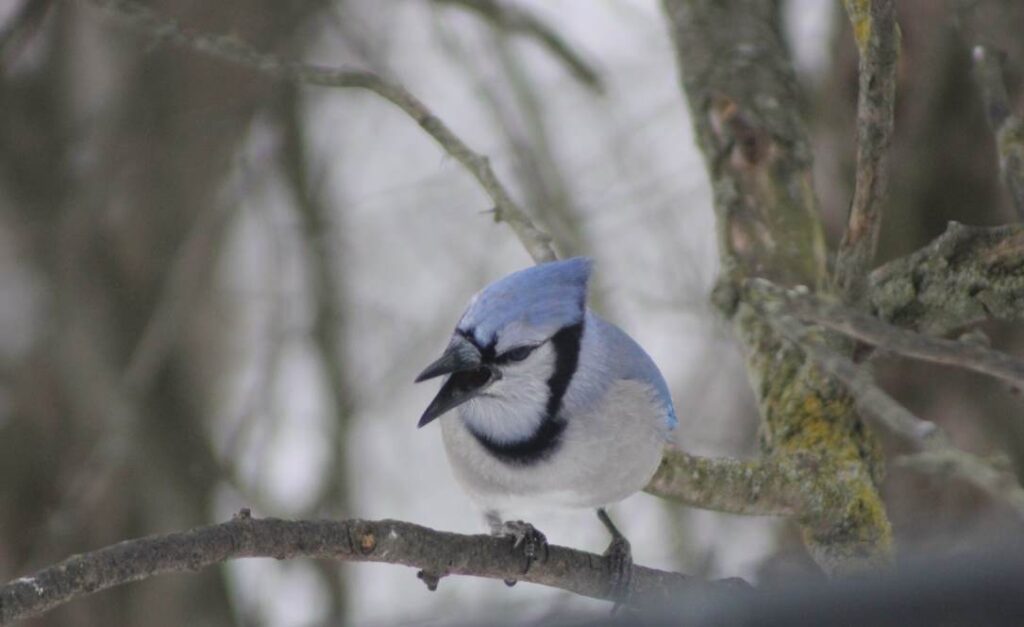
Now, I use that traditional feeder and a tube feeder with large openings to administer sunflower seeds. This keeps the undesirables away, and instead attracts birds I want to see: chickadees, woodpeckers, nuthatches, cardinals, and finches of various sorts. The finches have bills built for cracking seeds and eating their contents right at the feeder, while the chickadees and nuthatches have to do a little work to crack them open elsewhere, often using trunks and branches as levers and braces.

There are two types of sunflower seeds on the market – striped and black oil. I prefer black oil seeds because they are much easier for birds to open. Striped seeds are tough and you will find that fewer species and fewer numbers of birds have interest in them.

I also make it a point to buy sunflower with the shells intact. There are sunflower hearts and chips available on the market, but they can spoil easily in the feeder (even in just a day or two if they get rained on) and that will make birds sick.

One drawback to sunflowers is the shell casings that will be left on the ground below your feeders. You will have to rake and shovel them up at least once a week to prevent rot and disease.

Nyjer or thistle 

Nyjer seeds, also called thistle seeds by some suppliers, are small and expensive…you might find them to cost $2 to $3 per pound depending on where and when you shop (while sunflower seeds typically cost 50 cents to 75 cents per pound).  But, despite the cost, a 10-pound bag of nyjer will last a very long time. I can make that last most of the winter, even if my yard is frequented by a dozen or so finches on a daily basis.

Nyjer is one of my favorite seeds as the feeders attract some interesting birds – they will bring in goldfinches and winter irruptives from the Far North like very tame pine siskin and the occasional redpoll.

There are two ways to offer these seeds. One is a tube feeder made of metal or plastic mesh that the finches will hang from and pull seeds from. I used to use mesh feeders but stopped some years because they can be a pain to clean. It doesn’t take much for cracked nyjer seeds to spoil, so any seeds or casings left in the lower basin of a tube feeder will rot and make birds sick unless you clean it regularly (at least once a week).

A cleaner alternative to the tube feeder is the sock feeder. They typically feature a dome under which a sock or two hangs. In that sock you will put nyjer seed and the birds will do as they did with the mesh – hang from it and pull the seeds through the little holes.  The socks can be cleaned easily and not that they need much of it — they harbor very little disease — and most feeder kits come with multiple replacement socks.

It takes quite a while for flocks of birds to consume nyjer, so never fill the socks all the way up — even a third of the way might be pushing it. You will have to watch how the birds pace themselves over the first few weeks of their visits before you go wild filling the socks.
Suet

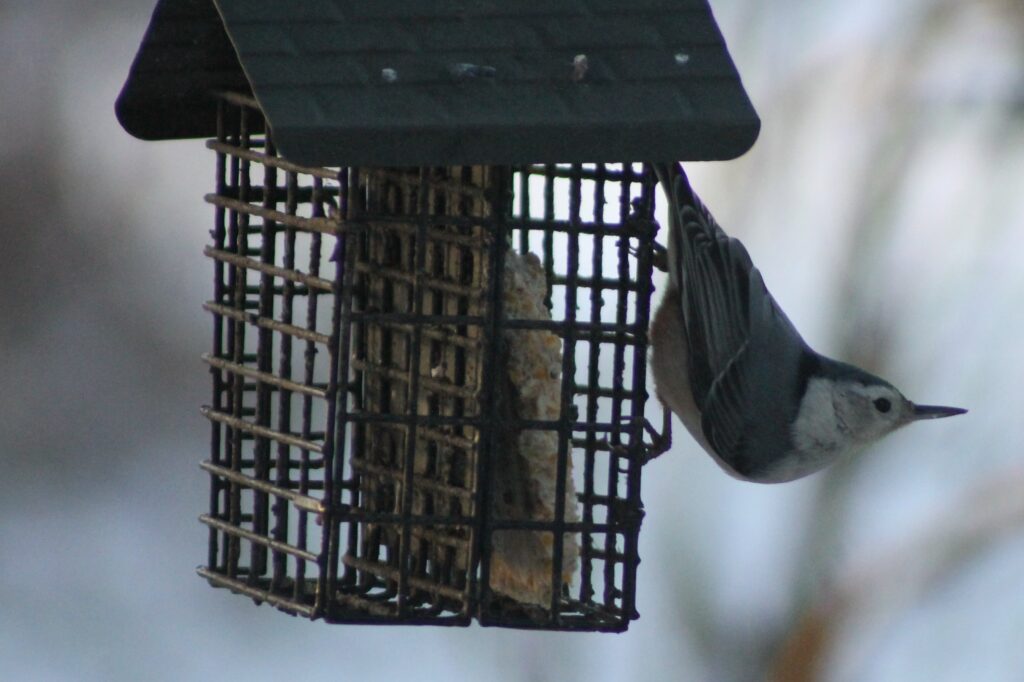
Suet, a collection of animal fat and seeds in a brick form, is a critical food source in the winter. The calories it provides are a lifesaver for insect eaters like nuthatches and woodpeckers that might have difficulty finding prey during the coldest days.

I have mine in a small hanging basket and keep two bricks going at once. 

Year round feeding

Some birdwatchers might be interested to know that I keep my seed feeding station going all year. It’s especially enjoyable in May and June when the goldfinches are in full color and in full song. It can make for a very colorful and musical lawn. I also enjoy watching a nesting pair of nuthatches in my yard – mom and dad will come to the feeder, each grab one seed, and fly it to their nest hundreds of feet away…all day long.

Where I live in Niagara County I can get away with this. But, I would never do it where I hang out in Allegany County…it’s bear country. You don’t want to tempt bruins with feed in the warm months when they are out of their winter slumber. As the saying goes, a fed bear is a dead bear…don’t get them used to getting easy meals in the presence of humans. 

Also, it should be noted that you should never put out suet from April to early August. It can get soft, which puts the greasy fat on birds’ feathers which can be taken back to the nest. That grease will cover an egg and suffocate the embryo.  

Enjoy the bird feeding and bird watching coming your way!

From the 12 January 2023 Wellsville Sun

Thursday, January 11, 2024

Exploring the Western NY Wilds: Keeping an annual list of birds

 Most birdwatchers are, in some way, listers.

Most keep life lists, counting all the species of birds that they’ve ever seen.

Then you have birders who tabulate both species and numbers for various special annual events like the Christmas Bird Count, Feederwatch, and the Great Backyard Bird Count.

And, there are those who take on a competitive Big Year, trying to accumulate as many birds as possible in a calendar year. The North American record is held Tiffany Kersten who saw 748 species in 48 states.

Last year, I started something I call the Little Year. By doing so, I kept count of all the species I saw in New York State.  

I wasn’t driven to accumulate as many species as possible, so I didn’t go out of my way to gather gull species in the wintry Niagara Gorge, nor did I spy upon wetlands at wildlife refuges in May to get shorebird species, and I didn’t chase down rare species whose locations were shared among birders online.

My only goal was to check off the birds I saw in my regular travels, as they happen, not as I make them happen.

Places that I frequent near home include our farm in eastern Niagara County, my workplace in the city of North Tonawanda, and the Erie Canalway Trail, all joined by a handful of hikes at the Iroquois Wildlife Refuge. Here in Allegany County, my home away from home, my birdwatching take place in our forest in Alma, the WAG Trail, Vandermark State Forest, and the Alfred University campus.

By keeping to the places I love, the places that see me often, in my quest to make this list, it brings a special sort of appreciation, wonder, and theorizing to the every day. It allowed me to see trends, consider species new to a place, and ponder what happened to birds I didn’t see.

For example, it was concerning that I didn’t see a northern harrier (marsh hawk) until October 30th, especially since I live among prime habitat of open hay and alfalfa fields.

I also went all of 2023 without a ruffed grouse sighting in Allegany County, despite seeing two mothers with babies the year before and forests around ours having lumber harvests which should, allegedly, increase numbers. Where did they go?  

The real head-scratcher to me was not seeing a single cuckoo, of either species. I had thought that the gypsy moth infestations of a few years ago would have allowed the caterpillar-eating birds to flourish and have healthy populations. It didn’t work out that way.  

On the positive side, I was able to see pairs of trumpeter swans and sandhill cranes in the summer, both species of which had only in recent years begun nesting at the Iroquois refuge. I also saw a pheasant near my home, a sighting not had in four years (a stark change from the old days when they were common). I also saw a least bittern, a bird I hadn’t seen in maybe 30 years.

Like every year that I get to spend time in the outdoors it was a good year. Over the course of 2023 I accumulated 124 species.

Many experienced birders might scoff at that number – especially from a nature columnist — as many hardcore bird chasers think 200+ is a worthy goal.  

But, my goal isn’t to get a number. It’s to get a better understanding for the birds I share my communities with. Those 124 provided enjoyment. They provided insight. They showed me how many birds are around me, birds adored and birds that maybe I took for granted.

I’m doing this list again in 2024 (and again, I’ll use this checklist from the New York State Ornithological Association: https://nybirds.org/Publications/NYSOA-FieldChecklist.pdf)

I encourage you to do the same, whether your birdwatching takes place in your backyard, in the vast state forests here in Allegany County, or the public trails of the Genesee valley. If you get 124 birds, 200, or 50, it’s something. Like it did for me, it will open your mind and heart — you’ll maximize your understanding and love for our feathered friends, no matter the final total.

Good luck.


From the 07 January 2024 Wellsville Sun

Friday, December 29, 2023

What could happen in state government in 2024


Being able to predict what New York’s lawmakers will do during their legislative sessions and budget workshops is increasingly difficult. So far, the 2020s and all its struggles (Covid, social unrest, learning loss, inflation, supply chains, mass immigration, and more) have really upended what the expectations for government are – by it and the people. It has been somewhat of a mess.


2024 is going to be no different. Here are some of the things we can expect in the year ahead:


Another stab at the housing crisis: Heading into the 2023 session, Governor Kathy Hochul made housing a major goal of hers, shooting for the stars with hopes for 800,000 new units built over the next decade. Nothing happened after a rather aggressive back-and-forth with the legislature that left a bitter taste with all involved in the budget process and the two months of legislating that followed its passage. But, unlike last year, there’s a big motivator for Hochul, the Senate, and Assembly to get things done – and that’s finding someplace to house the tens of thousands of asylum seekers being bussed and flown to New York. Some things we should expect to see are tax breaks for constructing affordable housing, and mandates, resources and funding for cities, towns and villages to increase their housing supply.


Attempts to address the migrant crisis: In the two weeks before Christmas, 7,000 asylum seekers arrived in New York City, taking the total, going back to the spring, to 158,000. It’s going to be a raucous session as the urgency of the crisis forces legislators to buckle down to find answers for employment, benefits, healthcare, education, onboarding and more to address this sudden, significant need and pressure. I used the word “raucous” because, right now, potential solutions being offered are few while finger pointing is being exercised in volume between both parties, the city and the state, and Albany and Washington DC. There’s a lot of salesmanship going on and not much in the way of statesmanship. That needs to change, quickly.


An updated bottle bill: 2023 marked 40 years since the passage of New York’s bottle bill, which put a 5-cent return deposit on bottles and cans. While generally successful (in 2020, the bottle bill helped to recycle 5.5 billion plastic, glass, and aluminum beverage containers), a third of eligible containers in New York still end up in landfills. There was a push by environmentalists to update it for its anniversary, but, oddly, there was little legislative urgency to get it done. This may be the year, especially on the heels of Attorney General Letitia James leveling a lawsuit against PepsiCo for pollution from its bottles. Proposals would double the deposit to 10 cents and place even more beverage containers under the return umbrella (water bottles were the last addition…way back in 2009).


The Extended Producer Responsibility Act: Not only will the bottle bill’s proponents be emboldened by James’ lawsuit, so will lawmakers who have tried to make EPR a reality in recent legislative sessions. Under EPR, producers of plastic and paper/cardboard packaging and the manufacturers who use it would be required -- depending on what variation of the proposed law is passed -- to cut back on its usage in defined regular increments and/or contribute to a fund that would pay for recycling and reuse. Also, a state office would be created to oversee what producers are doing. Similar laws are in place elsewhere, like California, Colorado, and Maine.


Bereavement leave: In 2018, the Legislature voted overwhelmingly (61-1 in the Senate, 111-32 in the Assembly) to add a bereavement leave benefit to the state’s paid leave program. Governor Andrew Cuomo vetoed the bill that would have allowed up to 12 weeks of paid leave, at two-thirds salary, for someone who lost a family member. Cuomo was against it because it would have been too burdensome on employees (it would have increased the worker-funded insurance premiums) and employers (12 weeks was considered an exorbitant amount of time). I wouldn’t be surprised if they go back to the drawing board and pass a leave package in the 3 to 6 week range in 2024. One has to figure they’ve got to do something like this to keep alive the trend of employment-related laws that have seen, in recent years, higher minimum wages, paid leave, paid sick days, covid leave, sexual harassment training, salary disclosures, lactation protections, and mandatory retirement plans.   


Many more items will be discussed in Albany, everything from further solidifying the path to addressing the state’s obligations under the Climate Act to ironing out a long-term agreement with the Seneca Nation.


2024 is going to be a wild session, for sure.


Fasten your seat belt.


From the 02 January 2024 Greater Niagara Newspapers, Batavia Daily News, and Wellsville Sun

Exploring the Western NY Wilds: Mountain ash – an important tree for wintering songbirds


The mountain ash is a small tree, reaching 25 feet in height on the most impressive specimens.


What it lacks in stature it makes up for in terms of its beauty and its importance to local wildlife.


As its name implies, the mountain ash (which is not an ash but rather kin of hawthorns and apples)
frequents mountains. Abundant in cooler climes and stony, yet rich soils of Ontario, Quebec, and Maine, we find that New York is at the southern edge of its range. Nonetheless, it can be found in good numbers across the Adirondacks and at some of the higher elevations of Allegany County.


You are more likely to encounter the European species of it in backyards and in the woodlots near them (the latter is where birds contribute to their planting through their droppings). It is an extremely popular ornamental, as many people plant them to accent the appearance of their yard. They are sold at a few nurseries and are also available on the cheap every spring through the annual sapling sales run by the state and various counties. 


They have proven to be popular because of their small size and the showy fruits, found in large clusters, that last from September until March – or when songbirds consume them. The fruits on the American version are an intense red. The Eurasian version – also known as the Rowan tree – has orange fruits.


Those fruits aren’t poisonous, but that doesn’t mean you should make it a point to eat them. They aren’t especially flavorful. They are heavy in tannin, which gives black tea its flavor. Thus, the pulpy berries tend to be too bitter for consumption. Some folks counter that by making jellies and marmalades from the fruits while some adventurous souls make wine out of them.
The most common use is as "dogberry" jam, which mixes these berries with apples and ginger. It's a concoction found throughout the Canadian maritimes.


While most people won’t eat the berries, animals will – and they love them. Grosbeaks, cardinals, waxwings, and other berry-eating birds will browse on them during the winter. Deer will nibble at low-hanging berry clusters while turkeys and grouse will eat any that have fallen. In hard winters, birds are blessed to have access to this high-energy food. Mountain ashes have saved many a robin or bluebird that has spent the coldest months in Western New York.


It should be noted that especially at the tail end of gentle winters (sort of like the one we’re having now) many berries will remain since birds could easily find nutrition elsewhere. Those holdover berries contain an extra kick: If they’ve gone through a bunch of freeze/thaw cycles and linger in the warmth, they will ferment and birds that eat them will get drunk! Drunken birds will fly erratically, miss perching branches, and slowly fly into things. Every so often you’ll catch national news stories of flocks of birds exhibiting this “strange” behavior.  


You should consider mountain ash as an addition to your backyard. I am a big fan of growing trees and shrubs that are natural to the area and/or contribute to the health of local wildlife. This lovely tree certainly fits the bill.


From the 29 December 2023 Wellsville Sun