Monday, June 13, 2016

Reflecting on Belva Lockwood – the first woman to run for President


Last week, Hillary Clinton secured the Democratic presidential nomination, becoming the first woman, in the eyes of many, to officially run for that office. Not to belittle her accomplishments, but she is not the first. To properly identify what Clinton has accomplished, one must say she is the first woman to run for president via a major political party. In terms of being the first woman on a presidential ticket from any party (large or small), she was bested by someone who was born and raised right here in Niagara County: Belva Lockwood.

Lockwood ran for the office of the president in 1884 and 1888, both times under the National Equal Rights Party. In 1884 she received 4,100 votes, a fraction of those received by winner Grover Cleveland — ironically, another candidate with a solid Western New York background — who garnered 4.87 million votes.

Limited numbers notwithstanding, Lockwood’s performance far rivals what Clinton has done. Since Lockwood’s passing, women have had a long history of holding federal office dating back to 1917 in the House (when Jeanette Rankin was elected) and 1932 in the Senate (when Hattie Caraway was elected).

But back when Lockwood ran, women were looked at as second-class citizens; they couldn’t even vote. Back then the common sentiment was that they belonged in the home and shouldn’t participate in more manly pursuits like governance and law. The majority of the “gentlemanly” press painted her as a joke when she campaigned, just as they did any other woman who counted herself as a suffragist fighting for women’s voting rights.

Lockwood was incredibly instrumental in changing those disgusting ways in which we viewed and treated women in the public arena. She overcame the negative coverage and showed that she was up to the task of debating and developing a platform, a 15-position masterpiece that was arguably more substantial than that of Cleveland or his Republican foe, James Blaine. Had women possessed the right to vote, she would have been a formidable opponent and definitely a game changer (The 1884 election was close: Cleveland had 48.5 percent of the vote while Blaine had 48.02 percent).

Outside of politics, she was just as impressive. As a teacher, she developed new curriculum in her schools and expanded the knowledge base afforded young women, exposing them to studies that only men once took. She also became one of the first female lawyers to practice in the U.S. and ultimately the first one allowed to practice before the U.S. Supreme Court.

She was a successful lawyer at that; she fought the case of the Eastern Cherokee Indians against the government, winning them a settlement of $5 million (which in today’s dollars is $97 million). Somehow, she managed all this while running a boarding house and tirelessly fighting for women’s rights.

She was an entirely self-made woman; her achievements were not the result of privilege. Lockwood empowered herself and gave women the hope that they could do the same. In her time she ranked with Susan B. Anthony (who was immortalized on a dollar coin) as one of the most powerful and well-known women in the country.

Despite all of that, America has forgotten who she was and what she did, as made evident by the accolades thrown upon Clinton with nary any praise for Lockwood having paved the way. Sadly, Lockwood has not even become a footnote. And, her name never came up in discussions regarding who should succeed Andrew Jackson on the twenty-dollar bill.

It’s high time Belva Lockwood got her due – she was the first woman to appear on a presidential ticket and, as made evident by everything she accomplished, she truly was presidential material.  


From the 13 June 2016 Greater Niagara Newspapers

Friday, June 3, 2016

EXPLORING THE NIAGARA FRONTIER: The polyphemus – WNY’s scary moth


This past Sunday, my family and I awoke to find a gigantic moth on the outside of our kitchen window. It was a polyphemus moth, the largest – and the least common - of the giant silk moths that can be found in Western New York.

While my daughter and I thought its wingspan of a half foot was intriguing, my wife found it unsettling, as it reminded her of a bat. She’s not the first person that I’ve heard share such thoughts and she won’t be the last.

Man is not the only creature frightened by polyphemus moths. Animals that could be considered potential predators like birds and frogs are also put off by the moth’s appearance. That can be attributed to the appearance of eyes on its large wings, which makes attackers think that it’s the face of a much larger animal, like a cat or something.


In the picture that accompanies this article you will notice how it looks in a closed state – there are two small eyes on the wings while the abdomen looks like a nose to complement the face. I did not get a picture of its wings being fully open, but, if I did, you would have seen two gigantic multi-colored eyes on its lower wings. It’s quite the sight and you can imagine why an animal might be frightened by it. And that is where it gets its name – Polyphemus was a one-eyed man-monster from the island of the Cyclops, made famous in Homer’s Odyssey.

Now is the time to watch for polyphemus moths across the Niagara Frontier. They emerge from their cocoons in late-May and early-June. In southern states, you will actually see two broods of moths, one in May and another in August. But, due to our northern climes, we see them just once a year for a small period of time (maybe a two week window).

These beautiful flying insects will be attracted to lights at night, which is why the specimen we saw lit on our window…he was no doubt enamored with the nightlight by that window.

As ugly as they may be to some people, they are even uglier when young. Their caterpillars are nearly hairless, bright green, squat creatures, thicker around than a big man’s thumb. They will reach three and a half inches in length.

They are none too numerous, though, as the adult female lays just 3 to 5 eggs on the underside of a leaf. Coming out of the egg, the caterpillar eats the shell and then proceeds to devour leaves of trees like oaks and maples, their preferred foods. They are voracious – it’s said that polyphemus caterpillars will eat 86,000 times their weight over their life cycle.

In the late-summer, the caterpillar will wrap itself in a large leaf and then spin a huge, hairy cocoon of silk. The light-brown, hair-like oval cocoon is then about half the size of a chicken egg. It’s a sight to see a silk moth hatch from them in the spring, the large beast coming out of the pupal home and stretching out its newfound wings.

If you have a chance to see one of these magnificent insects, don’t be afraid. Leave that to the animals that might otherwise feed on them – it’s a great defense mechanism that ensures we can forever enjoy these giants of the insect world.


Bob Confer is a Gasport resident. His column, Exploring the Niagara Frontier, is published every Thursday on All WNY News.

From the 02 June 2016 All WNY News

Thursday, June 2, 2016

Tourism would benefit from numbered county roads


I often like to tell people I live out on County Road 7. That’s usually met with some head-scratching and confusion because Niagara County is not a place that uses county road signage. Thus, unless you are versed in the County’s history, you will be unfamiliar with the system.

It shouldn’t be that way. Numbered county roads and the appropriate signage serve great benefit.

If you’ve ever been to Allegany County then you know what I’m talking about. There, the attractive blue background, yellow lettered signs adorn every county road, making it easy for residents and visitors alike to navigate the back roads that are just as much primary roads as the more well-known state routes. For example, if you want to get from Alfred to the Wellsville area, you’d jump on County Road 10 or County Road 12. If you plan to travel from Friendship to Belmont you’d likely use Route 31A.

A numbered highway system makes it easy for connecting the dots on your travels, meaning you don’t have to remember lengthy road names which often change when travelling through various towns. Plus, the junction signs that come with such a practice further the convenience of travel. It’s really tough to get lost.   

This has proven to be a major asset and a tool for the various businesses in Allegany County that rely on tourism. The county’s tourism department uses the numbered system in its brochures to promote the ag, arts, and scenic trails while using it as an aid for parents who might be visiting their kids at Alfred University or Houghton College.

Such a way of identifying our roads would prove quite meaningful in Niagara County. Here, tourism defines our economy, rather than complimenting it and, as recent history has shown, we are much more than Niagara Falls. Tourism experts are making sure that Niagara Falls is just one stop of a multi-faceted experience and they have been sending tourists further out and deeper into our county, whether it’s to enjoy the artsy flair of Lewiston, the fishing in Newfane, the waterfront in Olcott, the locks in Lockport, the Niagara wine trail, or the agritourism in places like Gasport.

Getting people to those locations requires an infrastructure with ease of use. Sure, a lot of people have GPS systems, but many don’t travel with them and few rental cars come equipped with them. And, many Niagara Falls visitors originally didn’t expect to leave the City limits until the options were presented to them. We need to make it simple for them to enjoy all of the great things we take for granted.

It’s not so easy to navigate a whole new world when we throw a map at them or they go to a website and they read and have to remember names like Upper Mountain Road, Lockport Road and Slayton Settlement Road. It would be much simpler if they could reference and retain County Roads 5, 6, and 7, respectively.

That’s especially important when they don’t speak English (but everybody “speaks numbers”). One busy day last summer in Olcott I counted 6 different foreign languages being spoken by tourists. How did they get there and did we make it easy on them?

Being an international destination we have to be embracing and accommodating…and it starts with our highway system.  All of our county roads are well-maintained by the County’s excellent road crews and they have seen years of investment from residents. Why not capitalize on all of that and promote these thoroughfares accordingly? Not only will the tourists benefit, but so will every one of our wineries, restaurants, shops and farms.       


From the 06 June Greater Niagara Newspapers 

Thursday, May 26, 2016

Scouting brings confidence to young men


If you know someone in their 20s or 30s, you’ve no doubt heard them ask if they should bring a child into this world. They say that because these are some heady times and today’s youth are bombarded with so much and they face so many obstacles and dangers.

This has led to something that I would call a “confidence crisis”, not only for those potential parents, but especially for those they beget. Children and teens are increasingly lacking in confidence in themselves and the world around them.

Today’s kids don’t have confidence in their families. Not only is the divorce rate still pretty high, but too many women are left to raise children on their own as so-called “dads” abandon them, and their interaction is limited to an occasional child support check, if anything at all.

Today’s youths don’t have confidence in their futures --- they saw their parents stung by the Great Recession and they see an economy that’s still a little wobbly, offering them little hope for tomorrow.  

They don’t have confidence in their safety. School shootings, terror attacks and random acts of brutal violence dominate the news cycle, and have changed the way they live in and move about this country.

They don’t have confidence in the leadership of our country. They see grown men and women who want to lead us attacking one another and presenting very few legitimate options to better our United States.

And, they don’t have confidence in themselves. The Age of the Internet and the destruction of good old fashioned real human-to-human interaction have eroded emotion and empathy, leading to bullying and abuse and the image issues that come with that.

So, what is a modern parent to do?

How do you overcome these crises?

How do you instill confidence in children?

The answer to all of these questions is one word: Scouting.

The Boy Scouts of America have always given -- and will always give --- the boys and young men of this country the tools they need to succeed and the tools that America needs to succeed.

Take, for instance, the fatherless boys I had mentioned. In Scouting, their scoutmasters become their de facto fathers, bringing masculinity, strong fraternal support, paternal love, and important life lessons from a male perspective that those boys so desperately need.

Or, consider the boys who worry about their careers. Scouting and its myriad merit badges intimately introduce boys to career paths that they wouldn’t get proper exposure to elsewhere --- be it STEM, the trades, the arts, or business, these courses and the scouts’ efforts prepare them for the Real World and set them on paths to success in adulthood.   

Think of the boys who worry about the world’s safety. Scouting give them the abilities they need to combat the world’s evils – they are trained in first aid, they are versed in discipline, uniformity and chain of command. Think of how many teenage scouts save lives every year --- think of how scouts go on to become first responders, police, and members of our armed forces.

And what of those boys who see poorly led communities, states, and countries or a glut of bullying and other abuses in their schools? By learning good citizenship and community-mindedness in Scouting -- and getting out and doing things for people in need -- they are groomed to be character-driven leaders of governments, schools, businesses and churches. Our future is in great hands when the Scouts take over.

All of this, and so much more, gives the boys the confidence they need to be mature, overcome all the wrongs in their lives and this world, to make their lives better and to make everyone else’s lives better.

Boy Scouts transforms boys into men. Real men.

No other youth-based organization can claim that with such vigor….with such confidence.

So, if you worry about your son or grandson and what the world holds for them, don’t. Enroll him in Scouting. It will markedly improve his ability to handle the bad and the good that might be thrown at him. It will give him the confidence to succeed in everything he does. 


From the 30 May 2016 Greater Niagara Newspapers 

EXPLORING THE NIAGARA FRONTIER: Reindeer moss – the edible lichen (or so they say)


In the Far North of Canada, reindeer moss is an incredibly important food for caribou. It has been estimated that it provides 50% of the nourishment for the hoofed beasts in the summer months and 90 percent in the winter months.

Even though it is slow growing at just 3 millimeters per year, reindeer moss blankets the tundra and the understory of boreal forests, even after continual consumption by the caribou. It’s a ubiquitous part of the northern landscape.

We are at the southern edge the moss’s range here in Western New York, where it can be found in the higher peaks of the Allegheny Plateau near the Pennsylvania border in Allegany and Cattaraugus Counties. Its greatest abundance – and even then, it’s quite uncommon – is had at elevations in excess of 2,000 feet in this area. That holds to the old naturalists’ adage that an increase in altitude is similar to an increase in latitude; the North is best replicated the higher you go.

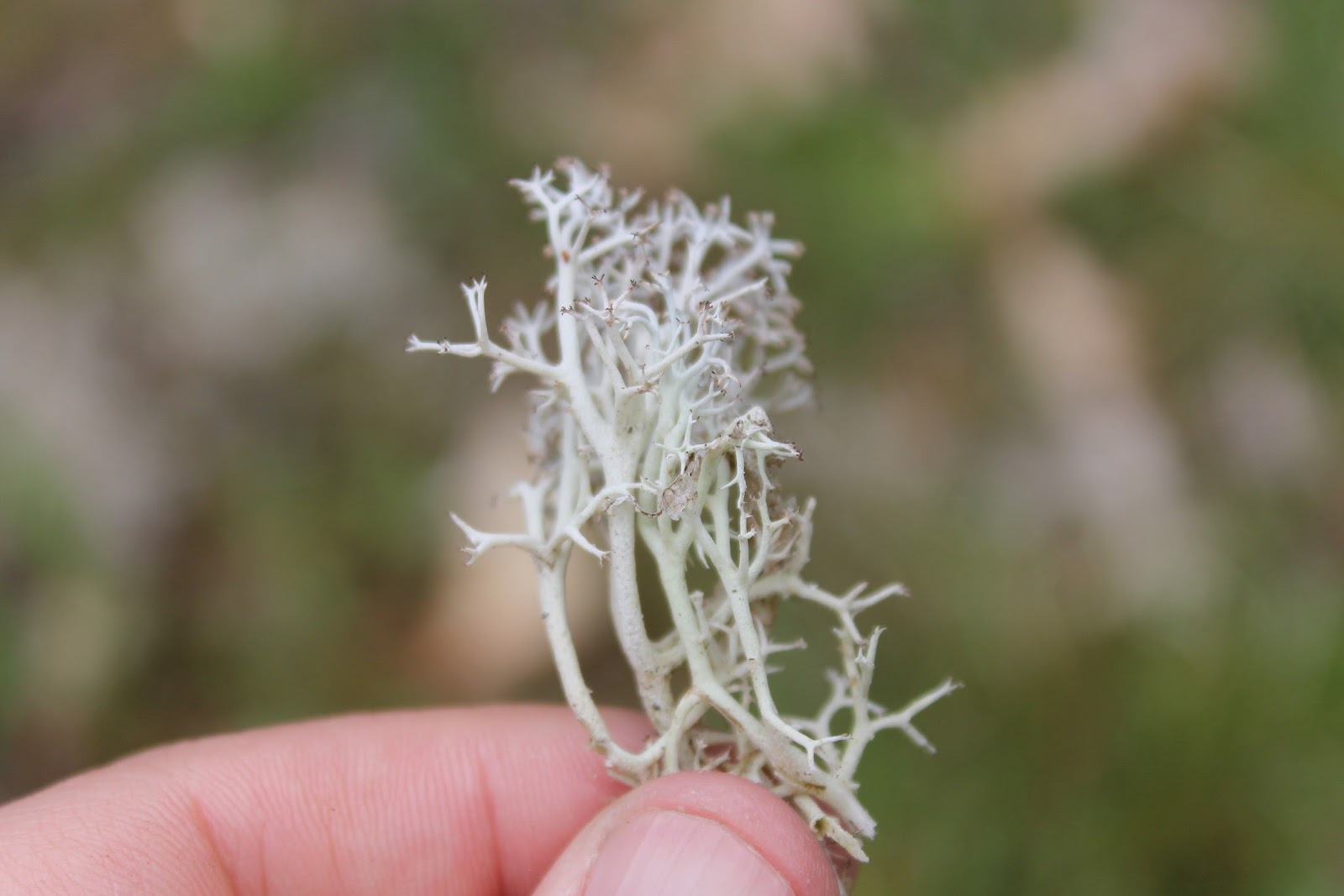
Reindeer moss can be found in disturbed sites in those hills, like parking areas, hunting camps, or logged-out forests. It can be identified by its small height (no more than 3 inches), light-grey, almost white, branched appearance, very dry and crunchy feel, and the small clusters that it grows in.

Despite its name, it is not a moss. It is a lichen. Lichens are best described as a symbiotic, composite organism comprised of both algae and fungi. You are likely most familiar with the bluish-green, plate-like lichens that grow on trees and wood.

It has been said that reindeer moss is edible and is a great survival food. It probably is classified as a survival food because you’d have to be in dire straits to eat it: it may be edible in the loosest sense of the word, but I don’t know who’d want to eat.

When sampled raw, it’s incredibly dry, like if you one day decided to munch on Styrofoam or straw. The flavor is moderately repulsive. Due to its heavy acid concentration, it is tart and best compared to the taste of a pill, like aspirin or Tylenol, if you bit into one. I’ve tried it once and never will again. It was that bad.

The Inuit, though, seem to enjoy the flavor when it’s cooked. They first soak it with water, boil it a few times to get rid of the bad taste, crumble it and add it to breads, milk and animal fats. After a few boiling and cooking it is said to have a more earthy, mushroom-like flavor. That seems to be a lot of work just to make something taste just OK.

Beyond that, it serves some medical purposes. Inuit use boiled reindeer moss water to fight diarrhea and kidney stones. Reindeer moss also makes for a good sponge and has been used to dress wounds in the North.

So, the next time you’re hiking the “high peaks” of Western New York and encounter this strange plant (?), fungus (?), admire it as a sort of treasure from the Far North. Just don’t eat. You’ll probably wish that you hadn’t if you did.


From the 26 May 2016 All WNY News

Thursday, May 19, 2016

Wage hikes will harm non-profits and their clients


Much has been written about the adverse effects that substantial minimum wage hikes will have on manufacturers, farmers and retailers. Only months into those announced increases, businesses are making or planning to make changes to their business models: fast food chains are replacing order takers with computerized kiosks and factories that had never considered automation are making such investments.

Maybe because of the nature of the beast (non-profit directors are more reserved and less outspoken than capitalists), comparatively little has been said about the impact that the wage increases will have on non-profits. One could argue that the minimum wage hikes will be more damaging to their operations. Couple that with the final overtime rule introduced last week by the Department of Labor, and we’re talking about a perfect storm.

I can say that with certainty, as I’ve been involved with non-profits my whole adult life and now lead the board of one. Our organization, like most of them in Western New York, operates on a shoestring budget. Any changes in our costs as caused by outside factors beyond our control cause handwringing and some very hard decision making.

With most non-profits, you are not charging users a large fee for your services and you really can’t -- most of us are in social service endeavors serving children, families, the handicapped, the addicted or the poor. So, we can’t pass the new costs on to consumers like a manufacturer or store can hope to do. Instead, we have to collect more money from donors. But, you can only go to the well so many times and every single non-profit in town ends up competing for a smaller piece of the same pie as they are facing the same crisis. On top of that, the local economy, especially in rural areas, is tepid, so money’s tight.  

Then what is a non-profit to do? They have to cut what was already their largest cost before these hikes-- personnel. I can tell you that the minimum wage and overtime rules were major forces behind my board’s decision to remodel our staffing, which cut the number of personnel directly available to interact with our clients.

We’re just one agency that has to cut back. I know many more stressed-out executive directors and board chairmen who have or will be letting people go. It’s not a good time to be employed by a not-for-profit agency -- the Grim Reaper of careers looms large.

Think about the impacts that come from that. Fewer workers mean fewer programs and services. Handicapped people will have less helping hands. Young expectant mothers will have less options to prepare them for motherhood. Scouts will see fewer programs offered by their local councils. Kids from blue collar families won’t have access to afterschool activities. Addicts won’t have counselors to lean on. I could go on and on, put I think you get the point.

That’s how it goes with government making stark changes to the markets; there are plenty of unintended consequences to go around. While, at first glance, wage hikes and more overtime pay might seem like a win for the working class, it’s not. As I’ve written before, many of them will lose their jobs in the profit sector. Then, based on what I’ve written here, the services they’ve relied on so heavily from the non-profit sector will be but a shell of their former selves. Not to be an alarmist, but people will suffer because of it.


From the 23 May 2016 Greater Niagara Newspapers

Tuesday, May 17, 2016

EXPLORING THE NIAGARA FRONTIER: Help bring back the nighthawks


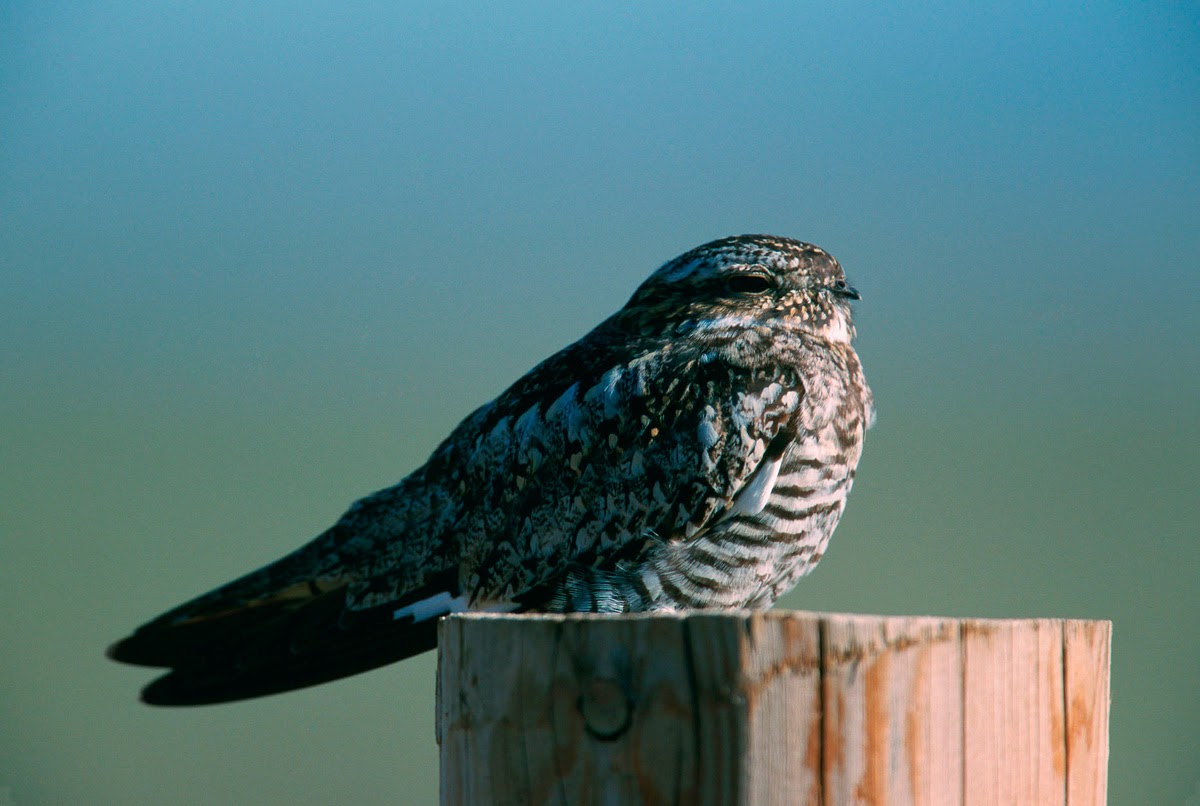
The common nighthawk is an interesting creature. At just over 9" in length, a little bit smaller than a blue jay, it is a medium-sized bird that can be seen at dawn or dusk, flying at great heights in search of the insects on which it dines.

You may have seen nighthawks before and probably remember them quite well: The brown birds can be frightening at first glance as they look almost like giant bats in flight. They are quickly told apart from the flying mammals by the white stripes on their wings and the call of "peent" that escapes their beaks.

Unfortunately, the common nighthawk is quickly becoming anything but common. The NY Department of Environmental Conservation calls it "a species of special concern," an animal the population of which merits attention and consideration. An argument could easily be made that nighthawks deserve to be classified as "threatened"; as they are in imminent danger of becoming endangered in the Empire State.

It wasn’t always like this. Historically, it was a very common bird, nesting on rocky areas so common to New York’s vast shorelines along and in our borders. But, as Man conquered the wilderness they built homes on the nighthawks’ nesting sites and, making matters worse, they brought with them domestic cats which wandered about and/or became feral, in turn feasting on the ground-nesting birds. Nighthawks soon became a rare sight. They saw a resurgence in the early 1900s and actually became quite abundant in urban areas until only recently, adjusting to the growing human population by living atop buildings – skyscrapers, apartments, schools and factories – that had flat, tar and gravel rooftops which provided fine places to nest. The gravel most commonly used was perfect for the birds’ needs and, save hawks and crows, the high rooftops were predator-free.

But, the times have changed and so have roofing technologies. More and more contractors and maintenance personnel are going with rubberized, PVC, or stone ballast roofs that - through no intentional fault of the roofers - have eliminated the gravel so key to the birds. Because of that, nighthawk populations have seen a drastic decline in recent decades. The NYS Breeding Bird Atlas that was compiled in the years 1980 to 1985 noted countless nests throughout the state, especially in urban areas. The most recent version of the Atlas (which uses data amassed from 2000-2005) shows a pitifully small number of nests. The difference between the two studies is quite disturbing.

This trend does not have to mean that they’re a lost cause destined for near-extinction in New York. Commercial property owners and government facility managers can easily help bring back the nighthawks by turning their building into a home for our avian friends. You will need a large flat rooftop, something in size of at least 6,500 square feet as that’s what nighthawks most prefer. Put down some gravel on the roof. Stone ballast won’t cut it; it’s much too large.

Nighthawks need peastone, wee pebbles with a diameter of 3/8 to 1/2 of an inch. The stones should be laid down in a 9-foot by 9-foot patch that is about two stones deep. An area that size will require six to eight sheetrock buckets of peastones.

You could just set that atop the roof but it is strongly suggested by some birders that you build a border around the stones to prevent the gravel from moving around (which also helps in alleviating the fears of Maintenance) and you should first lay down some landscaping fabric to protect the roof. Before commencing with your project you must also be cognizant of other factors like shade, worker traffic and drainage. Among the best resources available for such projects is the Project Nighthawk guidebook available at: http://nhbirdrecords.org/all-articles/Nighthawk-handbook.pdf

By building a nighthawk site at your place of work, whether you’re a businesswoman looking to do something for the environment or a teacher wanting to educate his pupils about the world around us, you can easily have an impact on one of nature’s creatures that so desperately needs our help.


Posted by All WNY News on Friday, May 13, 2016

Thursday, May 5, 2016

EXPLORING THE NIAGARA FRONTIER: False hellebore – the giant toxin of WNY

Every May, Western New York hikers are caught off guard by a rather gigantic flowering plant that is unlike any other to be found this time of year. With its large leaves and impressive height reaching up to 5 feet, it is always a conversation starter.


The plant is commonly called false hellebore, but it also goes by any number of names such as Indian poke, veratrum, and devil’s bite.

The false hellebore can be found in damp areas with rich soils, such as meadows, stream beds, and woodland springs. In our region, it is common in the valleys of Allegany County (especially around the Genesee River). Regionally, its numbers decrease significantly the closer you get to Lake Ontario and it is an uncommon sight in Niagara County.

It starts to sprout from the ground in late-April and grows quickly, hitting 3 feet in height by the second week of May. It starts to blossom weeks later, each branch producing dozens of small, green, rather unattractive flowers.

Hellebore probably gets its name because this plant truly can unleash Hell on any livestock or people that consume it. It is chocked full of steroidal alkaloids (especially in the roots) which can kill painfully and slowly by causing shortness of breath, convulsions, coma, and death from respiratory failure.

Deadly poisoning of humans is rare. For starters, who’s going to eat the plant? Secondly, most people will puke it up before poisoning sets in.

It does, though, commonly poison farm animals.

The USDA routinely issues notices to ranchers about hellebore with the biggest threat, apparently, being to sheep. A poisoned sheep can be treated with epinephrine, but if a pregnant ewe eats it, even in small quantities which wouldn’t kill her, it can lead to serious health problems for her young and herself depending on when it occurs in the gestation period. Early in it, it can lead to “monkey-faced lambs," which have a protruding lower jaw, underdeveloped upper jaw, proboscis-like nose, and other deformities. If it’s later in the gestation period, the baby sheep can grow at incredible rates before it is birthed and it will kill the ewe unless delivered by c-section.

Native Americans had uses for this deadly plant in small amounts. They used it medicinally or as a means to show “who is the boss.” As for the latter, if there was ever a problem with succession planning in certain tribes, groups of men would consume false hellebore and the last one to vomit was the leader because he was the real man out of the bunch. As for the medical purposes, they used it to treat constipation and upset stomach – it was likely useful for both as it could quickly evacuate both ends.

If you see one of these beautiful plants while exploring the Niagara Frontier this spring, take the time to admire it and reflect on its histories and dangers. If you are a farmer, though, do what you can to remove it (roots and all) from your grazing areas -- it’s an interesting plant for sure, but it’s a deadly one.


Bob Confer is a Gasport resident. His column, Exploring the Niagara Frontier, is published every Thursday on All WNY News.


From the 05 May 2016 All WNY News